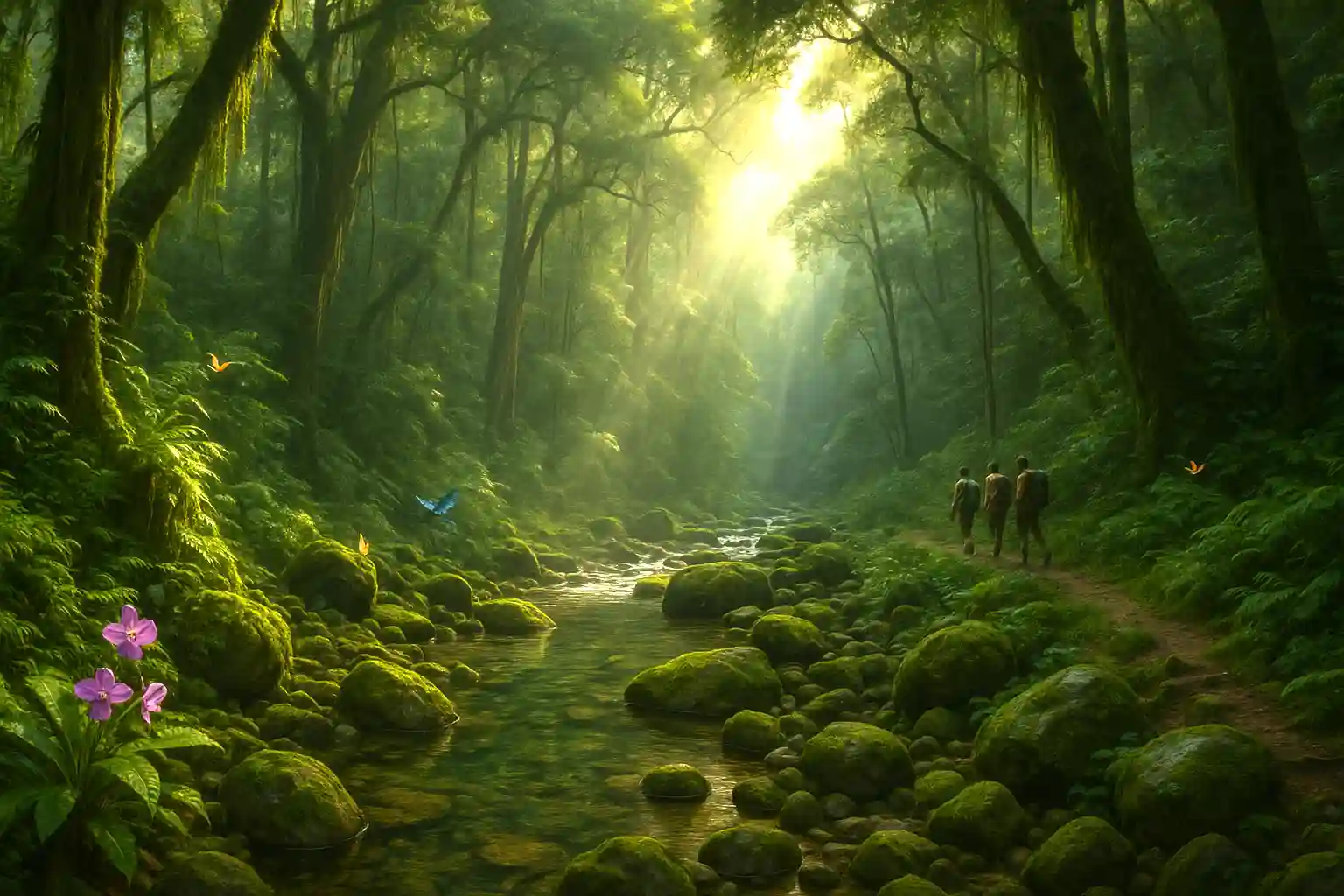
Silent Valley National Park stands as one of the most precious ecological treasures in India. Located in the Palakkad district of Kerala, this pristine rainforest has remained largely untouched by human activity for centuries. In 2025, it continues to be a haven for nature lovers and wildlife enthusiasts seeking an authentic wilderness experience.
What Makes Silent Valley Special
The park covers about 237 square kilometers of tropical evergreen forest. What sets it apart is the complete absence of cicadas, the insects responsible for the constant chirping sounds in most forests. This unusual silence gave the park its name. The ancient forest here has never been logged or significantly altered by humans, making it incredibly rare in today’s world.
The elevation ranges from 658 meters to 2383 meters above sea level, creating diverse microclimates within the park. This variation supports an extraordinary range of plant and animal species. Scientists consider Silent Valley a living laboratory for studying tropical ecosystems in their natural state.
Wildlife You Might Encounter
Silent Valley is home to the endangered Lion-tailed Macaque, one of the rarest primates in the world. These distinctive monkeys with silver manes can be spotted in the upper canopy layers. The park also shelters Nilgiri Langurs, Malabar Giant Squirrels, and if you’re extremely lucky, you might catch a glimpse of a tiger or leopard.
Bird watchers will find paradise here with over 200 bird species recorded. The Great Pied Hornbill, Malabar Trogon, and various species of woodpeckers make this forest their home. November to March offers the best bird watching opportunities when visibility is excellent.
The park protects several endemic species found nowhere else on Earth. The Travancore Tortoise, King Cobra, and numerous species of frogs and butterflies thrive in this protected environment.
Visiting Silent Valley in 2025
Entry to Silent Valley requires advance permission from the forest department. Tourists cannot enter independently and must join guided tours. This strict regulation helps preserve the delicate ecosystem while allowing limited eco-tourism.
The park offers two main trekking routes. The shorter trail takes about 2 hours and is suitable for most fitness levels. The longer trail extends for 6 hours and requires good physical stamina. Both routes are accompanied by trained naturalists who explain the forest ecology and help spot wildlife.
The best time to visit is between November and April when the weather is pleasant and trails are accessible. The park remains closed during monsoons from June to September due to safety concerns and to minimize disturbance to wildlife during breeding seasons.
How to Reach and Plan Your Visit
The nearest town is Mukkali, about 24 kilometers from the park entrance. Mannarkkad, the closest major town, is 50 kilometers away and offers basic accommodation options. Most visitors prefer staying in Palakkad city, which is better connected and has more lodging choices.
You need to book your visit at least a week in advance through the Kerala Forest Department website. The entry fee is nominal at ₹125 for adults and ₹50 for children. Camera charges apply separately. Group sizes are limited to ensure minimal impact on the forest.
Conservation Success Story
Silent Valley represents one of India’s greatest conservation victories. In the 1970s, a proposed hydroelectric project threatened to submerge large parts of this forest. A massive public campaign led by environmentalists saved Silent Valley, and it was declared a national park in 1984.
Today, the park stands as proof that economic development and environmental protection can coexist through careful planning. The surrounding communities have embraced eco-tourism, creating sustainable livelihoods while protecting this irreplaceable natural heritage. Visiting Silent Valley in 2025 offers a rare chance to experience what pristine tropical rainforests looked like before human intervention. It’s not just a trip but a journey back in time to witness nature in its purest form.